
Views: 105 Author: Site Editor Publish Time: 2025-09-24 Origin: Site


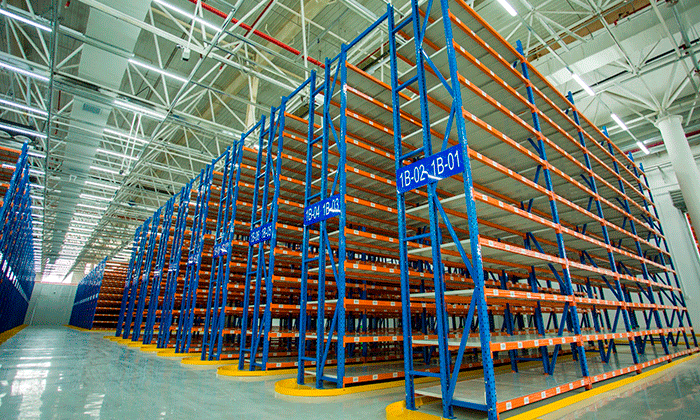
Overseas warehouses have become a buzzword in central and local government planning and deployment. Overseas warehouses enable exporters to ship goods in bulk to overseas warehouses for local sales and distribution. Ensuring smooth delivery, stability, and reducing costs, these localized warehousing models provide a stable and fast channel for Chinese products to be sold globally. With upgraded service models and the powerful power of high-tech, overseas warehouses are becoming crucial infrastructure for expanding cross-border e-commerce exports.
At a Cainiao overseas warehouse in Bremen, Germany, nearly 100 AGV robots, following instructions, meticulously and uniformly pick goods for shipment that day. This warehouse, covering over 40,000 square meters, resembles a Chinese market, with one million items and nearly 20,000 SKUs (stock keeping units) of Chinese goods neatly arranged on the shelves: household goods, 3C electronics, auto parts, outdoor furniture, and more.
In recent years, China's trade with countries and regions around the world has become increasingly frequent, and its new advantages in international economic cooperation and competition have continued to grow. Emerging trade formats such as cross-border e-commerce are flourishing. The growing volume of foreign trade has placed higher demands on cross-border logistics chains. To promote the development of cross-border trade, all links in the cross-border logistics chain are actively exploring and promoting model innovation to improve the speed and smoothness of cross-border logistics services.
Overseas warehouses, as a crucial component of cross-border logistics supply chain infrastructure and overseas transit points for Chinese goods, can effectively enhance supply chain resilience and industry competitiveness.
According to preliminary statistics from various regions, the Ministry of Commerce reports that there are now over 120,000 cross-border e-commerce entities nationwide, over 1,000 cross-border e-commerce industrial parks, and over 2,500 overseas warehouses covering over 30 million square meters. Of these, over 1,800 warehouses are dedicated to cross-border e-commerce, covering over 22 million square meters.
China's overseas warehouses are currently experiencing rapid and high-quality expansion. Specifically, total warehousing area has doubled in the past two years; business scope has expanded to cover major consumer regions worldwide; and service capabilities have become more comprehensive. In addition to traditional warehousing and distribution services, they also offer comprehensive value-added supply chain services such as after-sales service, supply chain finance, compliance consulting, and marketing promotion.
According to data from the German Federal Statistical Office, China-Germany merchandise trade volume in 2022 was approximately €298 billion, making China Germany's most important trading partner for the seventh consecutive year. As trade flows drive logistics, a growing number of Chinese logistics companies are choosing to establish overseas warehouses in Germany. Goods from China arrive at the Port of Hamburg, Germany, by sea and then transit by land to overseas warehouses for storage. Once a consumer places an order, the goods are immediately picked and shipped out of the warehouse, reaching European consumers in as little as one day. Due to its greater timeliness, this logistics model, which uses overseas warehouses for stocking, has gradually become a mainstream practice for Chinese cross-border e-commerce.
In terms of supply chain timeliness, overseas warehouses employ a pre-stocking model, transporting goods to warehouses in consumer markets in advance. This can reduce delivery time by at least 80%-90%.
Timeliness and quality are key to the success of Chinese cross-border merchants overseas. "Overseas warehouses using a pre-stocking model ensure timely delivery of goods." By establishing overseas warehouses in target markets, cross-border e-commerce companies can significantly improve logistics efficiency, reduce operating costs, increase customer satisfaction, and strengthen their competitive advantage.


